Speedmaster
CK 2915 · Cal. 321The origin of the line, with Broad Arrow hands and a steel bezel.
This selection presents key stages in the Speedmaster's development. Every reference has its variations and its own history.
Early Speedmasters are collectors' pieces in which authenticity and technical function matter equally.
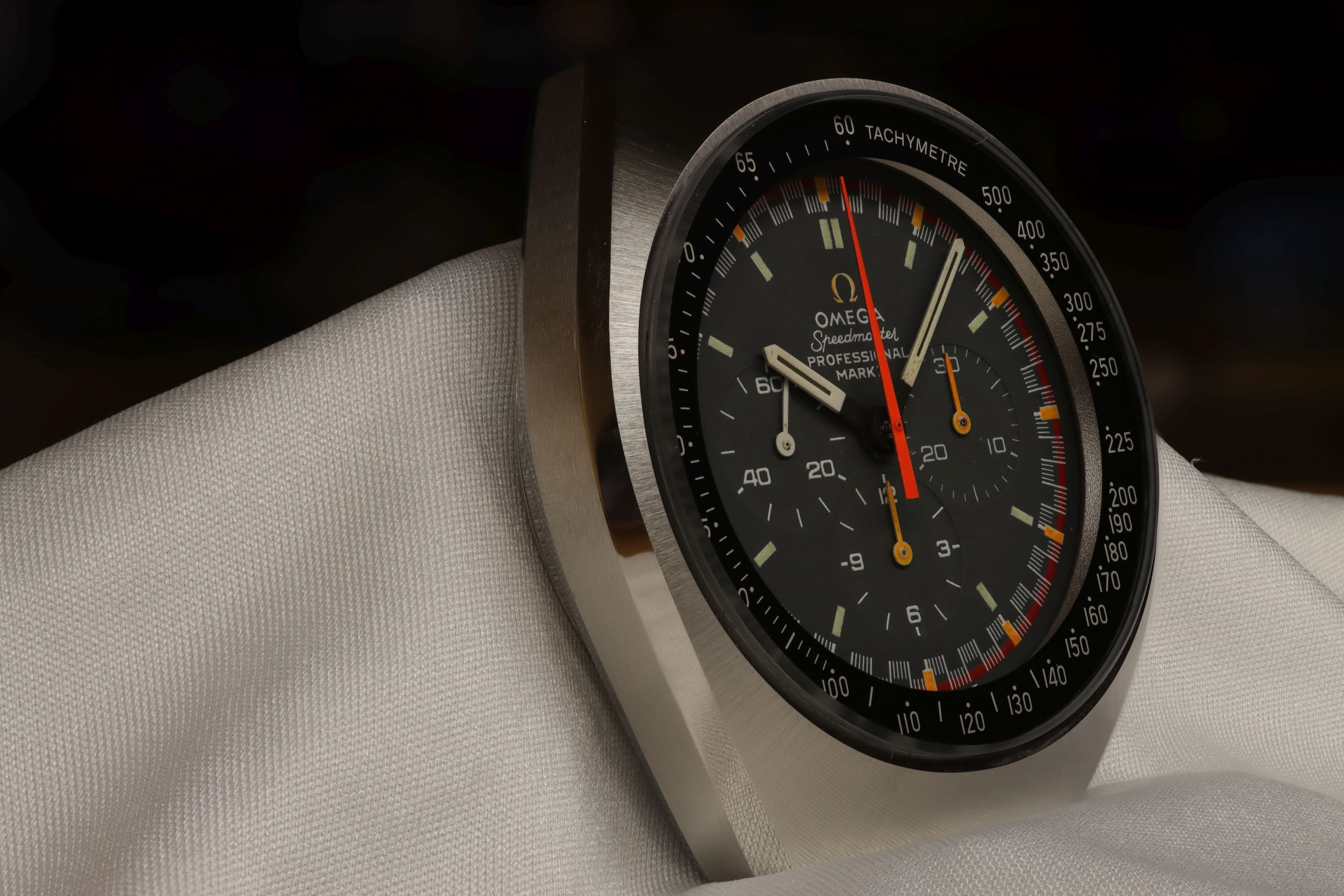
The model's history begins in 1957 with the CK 2915 and calibre 321. The CK 2998 and ST 105.003 retain the symmetrical case with straight lugs. The ST 105.003 passed NASA qualification in 1965. In parallel, the ST 105.012 was delivered from 1964 with an asymmetrical case protecting the crown and pushers. Original hands, luminous material, dials and bezels shape the character of these early watches.
How we treat original material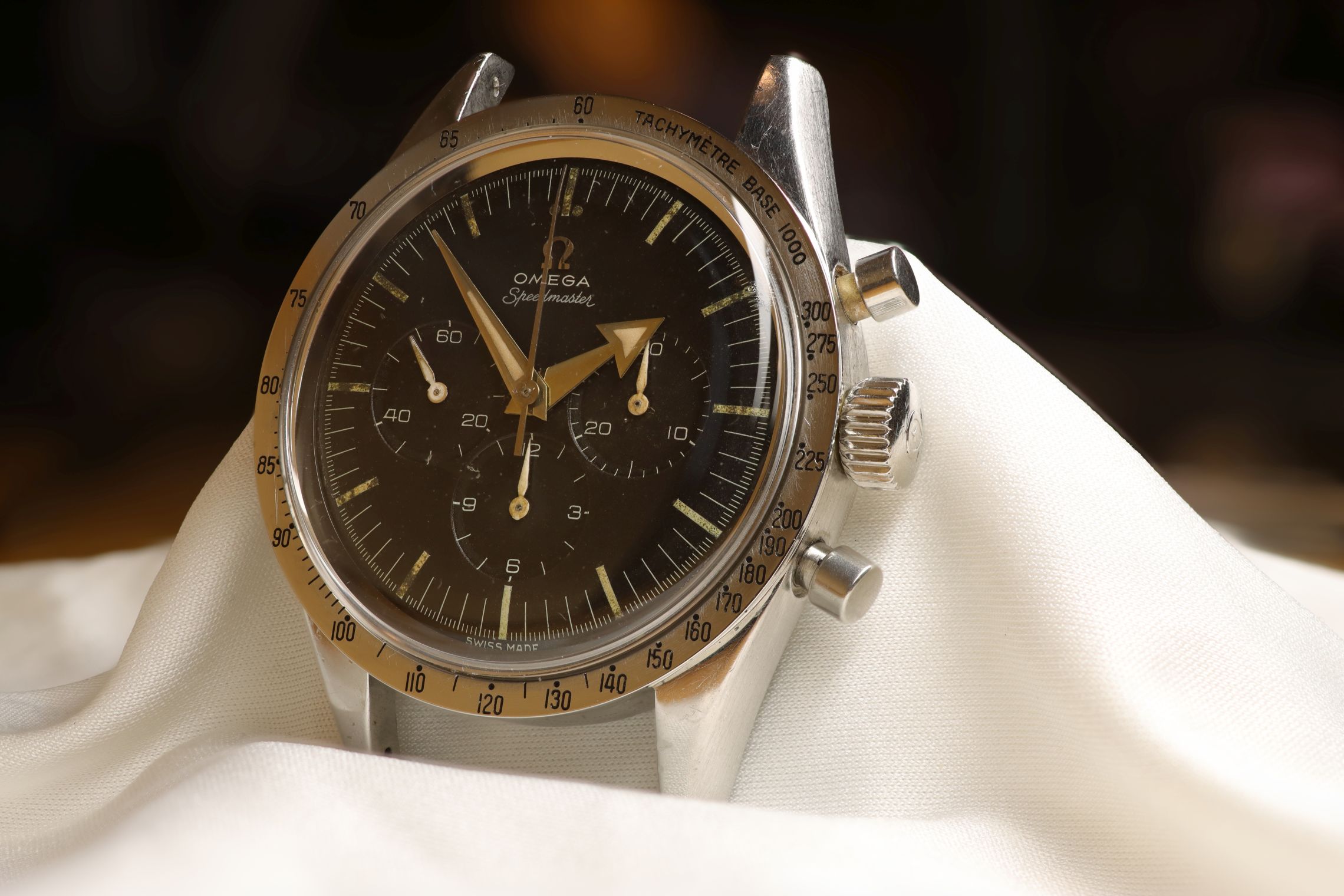
From the early column-wheel calibre to the current movement: the design remains recognisable, while the technical construction changes.
The origin of the line, with Broad Arrow hands and a steel bezel.
Early versions with distinctive case and dial details.
Asymmetrical case protecting the crown and pushers, with the column-wheel calibre 321. “Professional” appeared on the dial in 1964 – before NASA qualification in 1965.
The ST 145.022 introduced the cam-controlled calibre 861 in 1968. The rhodium-plated calibre 1861 followed from 1997, closely related technically to the late 861.
The standard-production Professional offered since 2021, with calibre 3861, a Co-Axial escapement and Master Chronometer certification; this reference has a Hesalite crystal.
A modern steel version with the reintroduced column-wheel calibre 321, inspired by the symmetrical ST 105.003.
The classic manually wound line also includes decorated movement variants and additional displays. Automatic Speedmasters and the Mark series form separate branches alongside it.
Decorated variants of the 861/1861 family. The first Speedmaster with a display case back appeared in gold in 1980; the steel version followed in 1985.
Manually wound chronographs with moon-phase and date displays. Here too, the movement, case reference and dial belong together.
A model name alone does not describe a complete watch. With historic Speedmasters, we consider the components together so that technical repair and originality remain consistent.
We assess the movement number, case reference and configuration together. The year stamped inside the case back is not automatically the production year of the complete watch.
Lettering, logos, hand shapes, luminous material and bezel details vary with the version. The colour of luminous material alone does not prove originality.
Old and new component versions were sometimes used in parallel; service parts were added during later servicing. A difference must therefore be assessed against the particular reference.
The Mark models are more than a footnote to the Moonwatch. Their case shapes and calibres present their own requirements for servicing and restoration.
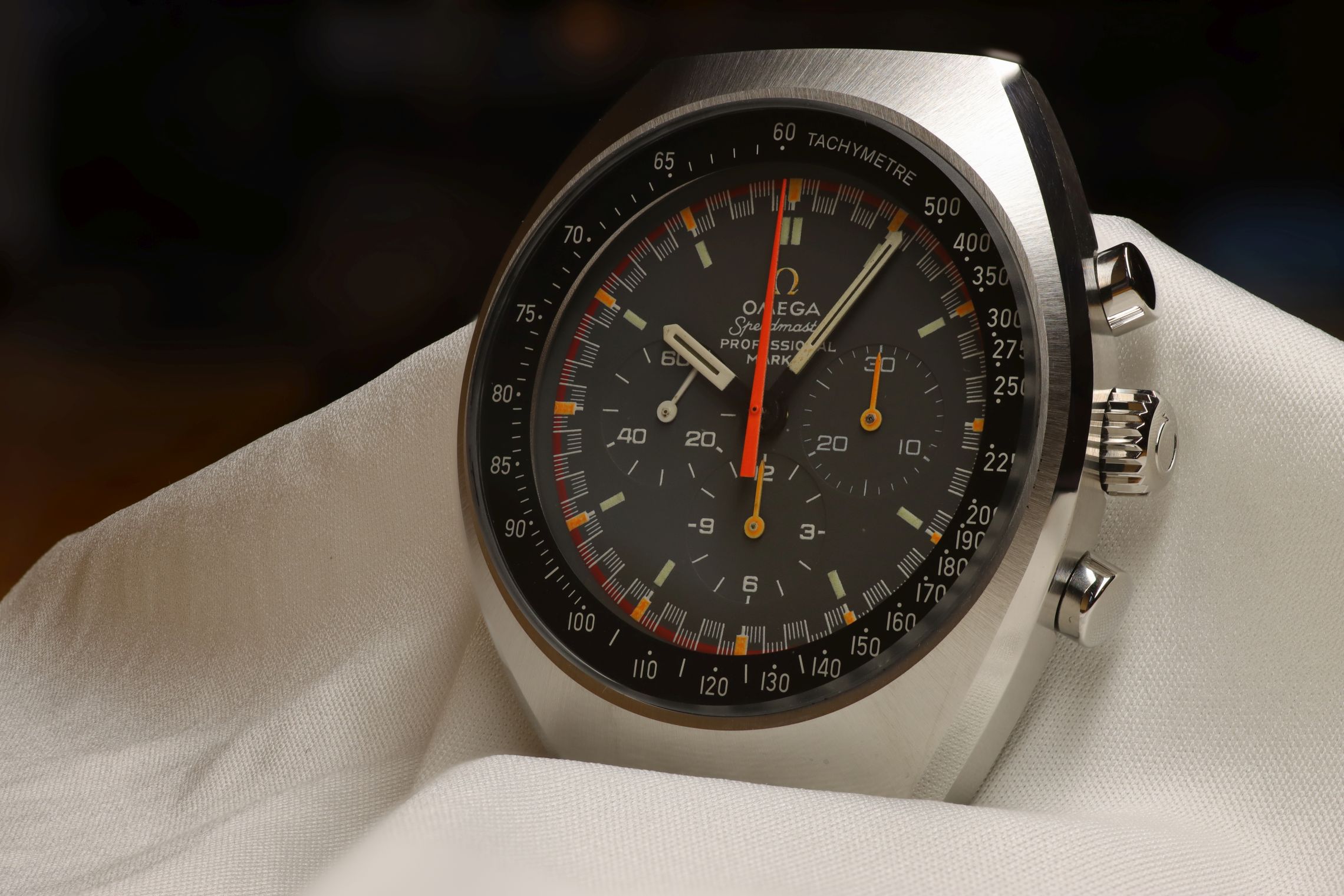
The tonneau case and the scale beneath the crystal give the Mark II a distinctive presence. In the Racing version, the coloured accents are part of that identity – and deserve particular attention during work on the exterior.
View original photographsTonneau case; shown here in the Racing version.
A striking design among the early automatic chronographs.
A distinctive continuation of the automatic Mark series.
Listed by OMEGA as the Mark IV; collectors call the later version the “Mark 4.5”.
The later Mark generation with its own distinctive design.
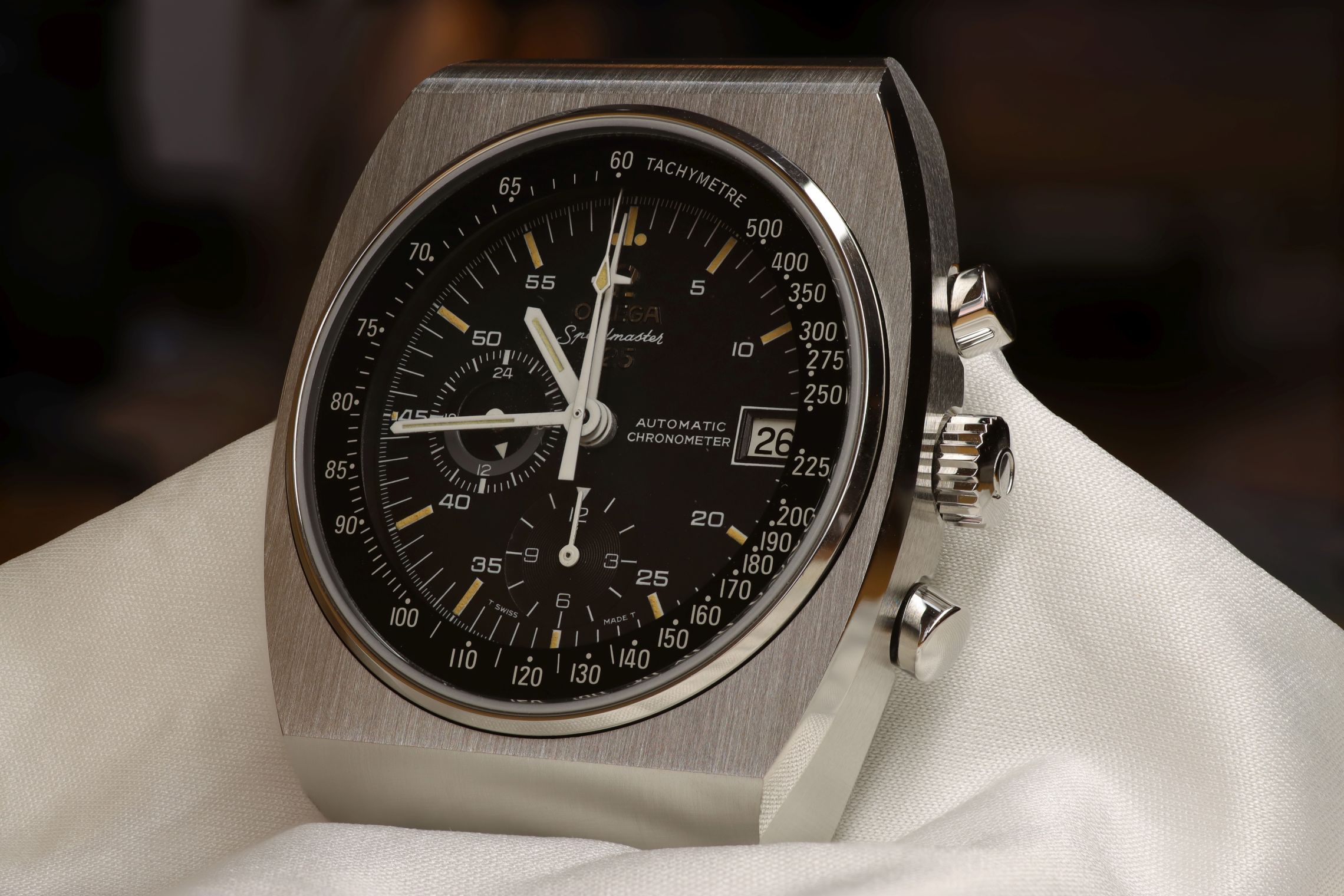
The striking automatic Speedmaster; its case number is 178.0002.
These references are examples, not a complete list of variants. We establish the exact identification from the watch, case and movement. OMEGA lists the 176.0012 as the Mark IV; “Mark 4.5” is the familiar collectors' name.
The Reduced, Speedmaster 125, Speedmaster ’57, special editions and other variants belong to the family. We assess every mechanical Speedmaster individually and establish which service is technically possible and appropriate.
The condition of the individual watch matters more than its model name – especially with early watches whose parts are difficult to replace.